
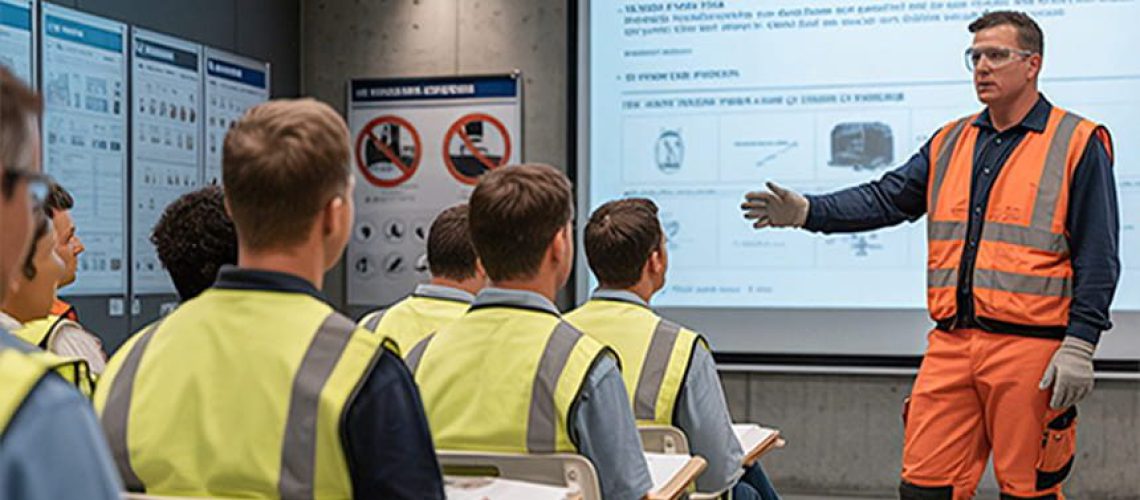
Drug Testing for Inductions plays a pivotal role in maintaining safety, compliance and operational integrity across major UK infrastructure and transport projects. Induction is often the first formal interaction a worker has with a site, and it sets the tone for behavioural expectations, safety standards and compliance culture.
On large-scale projects involving hundreds or even thousands of contractors, the induction process must be both rigorous and efficient. Traditional drug testing methods, particularly those reliant on laboratory analysis, can introduce delays, administrative complexity and operational bottlenecks. In safety-critical environments such as rail, utilities, highways and large construction schemes, these delays can affect productivity and programme timelines.
Fingerprint drug testing (FDT) offers a modern, scalable solution designed specifically for high-throughput environments — delivering speed, consistency and confidence without compromising analytical reliability.
Fingerprint Drug Testing at Scale in UK Infrastructure
Proven High-Volume Delivery Models
Fingerprint drug testing is already deployed at scale within large-volume induction programmes for major UK infrastructure projects. Auctus Management Group reports completing 25,000 fingerprint drug tests on one of the largest construction sites in Europe, demonstrating sustained high-volume throughput in a live, safety-critical setting.
This is not a pilot concept — it is, in fact, an operational model proven under real project pressures. Consequently, their delivery approach shows that FDT works reliably in high-throughput induction environments while maintaining consistency, efficiency and stakeholder confidence.
In the rail sector, RSS Infrastructure highlights the use of fingerprint sweat testing trackside, at depots and within compounds. The team tests, clears and returns workers to work within minutes.
Embedded in Live Project Environments
Fingerprint drug testing is also embedded as a standard induction requirement on major contracts. McCann Ltd incorporated fingerprint drug testing into its £60m Nottingham CityFibre infrastructure programme, and required all new employees to pass the test before starting work.
Furthermore, across infrastructure, logistics and engineering sectors, case studies demonstrate that FDT has moved beyond small-scale trials into routine, embedded induction workflows.
Throughput and Efficiency: Drug Testing for Inductions at Scale
Rapid On-Site Results
One of the primary advantages of fingerprint drug testing for inductions is speed. The portable reader used in the Intelligent Fingerprinting system typically delivers screening results in around 10 minutes.
For projects such as London Trams, Auctus describes on-the-spot testing where results are delivered almost instantly, enabling immediate decision-making in safety-critical environments. As a result, there is no requirement for off-site laboratory analysis before a screening decision can be made.
Consequently, this rapid turnaround allows induction programmes to process large volumes of workers efficiently without creating backlogs.
Reduced Downtime and Disruption
Unlike urine or oral fluid testing models that may require specialist facilities or controlled environments, fingerprint testing can be conducted directly on site. Workers do not need to leave the induction centre or travel to external clinics.
By removing laboratory waiting periods and off-site appointments, FDT therefore significantly reduces downtime. For infrastructure and transport operators working to fixed delivery schedules, this operational efficiency directly supports productivity and programme certainty.
Scientific Reliability and Analytical Confidence
However, operational efficiency alone is not sufficient; reliability is critical. Peer-reviewed studies of the Intelligent Fingerprinting lateral-flow cartridge have demonstrated strong analytical performance.
Research published in the Journal of Analytical Toxicology reports accuracy rates of 98.7% for THC, 94.7% for benzoylecgonine (a cocaine metabolite), 96.0% for morphine and 93.3% for amphetamine when compared with LC–MS/MS laboratory analysis of fingerprint samples. Further studies comparing fingerprint results to blood toxicology report accuracy levels between 88–97%, with specificity figures ranging from 91.7–97.3%.
As a result, these data provide confidence that fingerprint-based screening can operate at volume without sacrificing scientific integrity. Where required, confirmatory laboratory testing pathways remain available, ensuring compliance with established workplace drug and alcohol policies.
Consistency and Ease of Delivery During Induction
Standardised Collection Process
The fingerprint collection process is straightforward and standardised. Candidates press each fingertip onto a single-use cartridge, and the portable reader analyses it to produce a clear positive or negative result for each drug class tested.
In practice, this simplicity reduces the likelihood of procedural error and supports consistent delivery across multiple induction centres and project sites.
Minimal Training Requirements
In practice, staff can complete virtual training within approximately one hour. This enables HR teams, safety managers and site supervisors to administer testing confidently without requiring specialist laboratory expertise.
For large contractor workforces with rotating personnel and multiple subcontractors, consistent drug testing for inductions across locations is a significant operational advantage.
Building Workforce and Client Confidence
Modern infrastructure projects operate under intense public and client scrutiny. Visible, professional drug testing programmes demonstrate a clear commitment to safety and compliance.
Furthermore, fingerprint drug testing’s non-invasive nature helps improve workforce acceptance compared with traditional methods. At the same time, its portability and speed reassure principal contractors and asset owners that teams are upholding safety standards without delaying delivery.
For major UK infrastructure programmes, drug testing for inductions provides a balance of throughput, analytical reliability and operational control — enabling induction processes that are both efficient and robust.
Contact the Fingerprint Drug Testing Team
For answers to technical questions about fingerprint drug testing at inductions, see our FAQs or download our service brochure. For the latest sector insights, read our news and articles.
For reliable project delivery, contact us today at 0121 366 8803. Our experienced testing team is ready to assist you with your next project.
Sources and References
Intelligent Fingerprinting – 25,000 tests case study: https://intelligentfingerprinting.com/insights/news/auctus-management-completes-25000-tests-using-intelligent-fingerprinting/
RSS Infrastructure: https://www.rssinfrastructure.com/practical-innovation-the-growing-momentum-of-fingerprint-sweat-drug-testing-in-rail/
Auctus – Croydon Tram: https://auctusmg.co.uk/fingerprint-drug-testing-a-modern-safety-solution-for-croydon-tram/
McCann Case Study: https://intelligentfingerprinting.com/insights/case-studies/case-study-mccann/
A&F Sprinklers Case Study: https://intelligentfingerprinting.com/insights/case-studies/case-study-af-sprinklers-workplace-drug-testing/
DGP plc case study: https://ibs.inc/2024/01/23/dgp-plc-takes-drug-testing-in-house-with-fingerprint-drug-test/
